

“To proclaim the good news of Christ through word and deed,
to serve all people, following the example of Jesus,
and to strive for justice and peace in all the earth.”
-Evangelical Lutheran Worship, p. 236
This past weekend, many of our congregations celebrated the Baptism of Jesus, affirmed our own baptism, and heard Scripture proclaiming who God is and who we are called to be:
- From the prophet Isaiah, we heard of God’s Servant, steadfast in bringing forth justice.
- From Acts, we heard of Peter crossing religious and cultural boundaries to proclaim God’s inclusive love.
- From Matthew, we heard the story of Jesus’ baptism, where he is named God’s beloved Son, with whom God is well pleased.
Jesus’ baptism defined who he was. Sent as servant and light to the nations, he brought sight, freedom, and justice.
In the same way, who we are as children of God informs what we do.
This week, however, it feels especially difficult to know how to live out our baptism. As beloved children of God, how do we proclaim good news, serve all people, and strive for justice and peace? The scriptural understanding of justice includes care for the vulnerable and oppressed, and living in right relationship with God and neighbor. What does that look like today?
Our synod—223 congregations and 95,000 people—includes beloved children of God living in vastly different contexts and holding deeply divergent views.
We grieve with the family, friends, and neighbors of 37-year-old Renee Nicole Macklin Good after she was killed in South Minneapolis by an ICE agent of the federal government.
In recent days, I have also heard your testimonies about ICE activity in your own communities. This is not only an urban concern; it is also the reality in small towns and rural areas across the rural roads and the streets of our small towns and cities.
- High school students and parents are being snatched away with no family communication.
- Immigrant citizens and refugees are being targeted by systems shaped by racial profiling.
- Neighbors and friends are being called “garbage.”
- People are afraid to leave their homes—to drive children to school, go to work, and attend lawful immigration appointments.
- Daily life is being disrupted in profound ways.
As in many crises, we assume, “This could never happen here.” Yet across this synod that I love and serve, it is. And fear is growing.
Dear church, I know that everyone in your congregation does not agree on what this means or what should be done. As one called to shepherd God’s people and bear faithful witness with love, gentleness, wisdom, and courage, I see the many contexts in which you live. I see pastors wrestling with Scripture, loving their people, and seeking to speak faithfully in these days. I see neighbors going out of their way to care for others. I see faithful members of our congregations taking seriously their daily work in emergency services and local law enforcement. I see congregations who know there are no easy answers free of tension. I am convinced that Scripture provides some direction-and that this is not what God intends for this world.
- Isaiah calls us to be “repairers of the breach.”
- Micah teaches us how: “Do justice, love kindness, and walk humbly with your God.”
- Jesus leaves no ambiguity: “Love your neighbor as yourself.”
- Revelation holds before us God’s vision: “A great multitude that no one could count, from every nation, tribe, people, and language.”
- Each week we pray, “Thy will be done on earth as in heaven.”
You are beloved children of God. As followers of Jesus, we are given faith practices to sustain us in times of tension and challenge:
- Prayer, worship, singing, learning, serving, generosity, and community.
- The Ten Commandments to protect us and our neighbors and temper our rhetoric.
- Bible study and our Lutheran confessions to ground us. I encourage you to study and discuss the new social statement, Faith and Civic Life: Seeking the Well-Being of All.
Even when we disagree about many things, we hold on to our Christian and civic responsibilities, care for the neighbor, the responsibility of elected leaders to be accountable for truth and upholding constitutional justice amid rising violence and authoritarianism.
I strive daily to live out my baptismal calling as a follower of Jesus, as we affirm in the baptismal covenant. I also take seriously my responsibilities as a U.S. citizen. Those responsibilities took on deeper meaning for me years ago when, alongside hundreds of others, I raised my right hand and took the Naturalization Oath of Allegiance on behalf of my children—promising to preserve, protect, and defend the Constitution of the United States against all enemies, foreign and domestic. I do not take that promise lightly, and I feel its weight.
I pray for you and your congregations, for our communities, our state, our nation, and our world. Today, January 15, on the birthday of the Rev. Dr. Martin Luther King Jr., I remember his words: "Injustice anywhere is a threat to justice everywhere. We are caught in an inescapable network of mutuality, tied in a single garment of destiny. Whatever affects one directly, affects all indirectly." (1963). Dear friends in Christ, please hold each other close in the reality that in holy baptism, we are church together.
Grace and Peace,
Bishop Dee Pederson
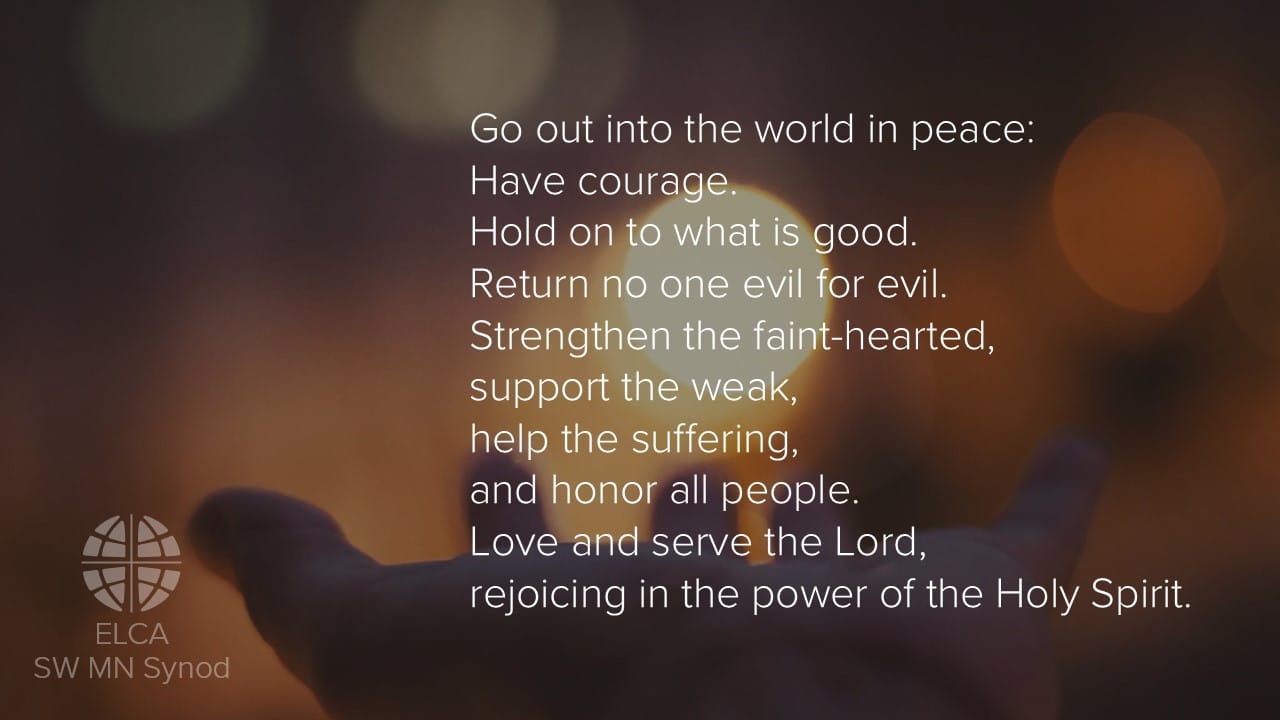
Go out into the world in peace; have courage;
hold on to what is good;
return no one evil for evil;
strengthen the fainthearted;
support those who are weak; help all who suffer;
honor all people;
love and serve God, rejoicing in the power of the Holy Spirit.